Most Americans in a new poll call AI bad for society and oppose more data centers
A Washington Post-ABC-Ipsos poll finds 57% of US adults call AI bad for society, and 66% oppose building more data centers.

A majority of US adults say artificial intelligence is a bad thing for society, and larger majorities oppose new data centers, in an ABC News/Washington Post/Ipsos poll released on October 21, 2026.
The result matters because companies are still racing to build the buildings that train and run those systems. In this survey, the public’s view of that build-out is plainly negative. The figures below are opinions, not a measurement of what AI does. They are not voting advice, and they are not a finding about jobs, safety, or the grid.
Ipsos interviewed 2,545 adults from October 9 through October 13 on its probability-based KnowledgePanel. The topline puts the margin of sampling error at plus or minus 2 percentage points for the full sample. Questions asked of a random half, about 1,271 to 1,274 adults, carry a margin of plus or minus 2.8 points. Invitations went to 3,861 panelists. Ipsos dropped 78 interviews in quality control. The poll was conducted in English and Spanish.
Society, and the person answering
Asked whether AI is a good or a bad thing for society, 57% said bad and 42% said good. The intense answers sit with the critics: 17% said extremely bad, and 2% said extremely good. One percent skipped the question.
The personal question is almost a tie. Fifty percent said AI is good for them, and 49% said it is bad. Again the tail is lopsided: 15% said extremely bad for them, and 3% said extremely good.

Risks people rate as high, and benefits they do not
The topline asks about five possible consequences and reports a “high risk” share that combines “very high” and “high.”
- 73% said there is a high risk that the growth of AI will lead to hacking of secure computer systems.
- 65% said there is a high risk of eliminating many jobs.
- 62% said there is a high risk that people will lose the ability to make their own decisions without AI.
- 54% said there is a high risk of increasing economic inequality.
- 33% said there is a high risk of human extinction. On that item, 32% chose a moderate risk and 34% said little or no risk.
The benefit questions use a different scale, “big chance,” and the shares are smaller. Thirty-four percent said there is a big chance AI will make everyday tasks easier. Thirty percent said that about US dominance in AI technology. Twenty percent said that about making people more productive, while 38% said there is little or no chance of that. Thirteen percent said there is a big chance of creating many new jobs, and 52% said little or no chance.
Data centers and regulation
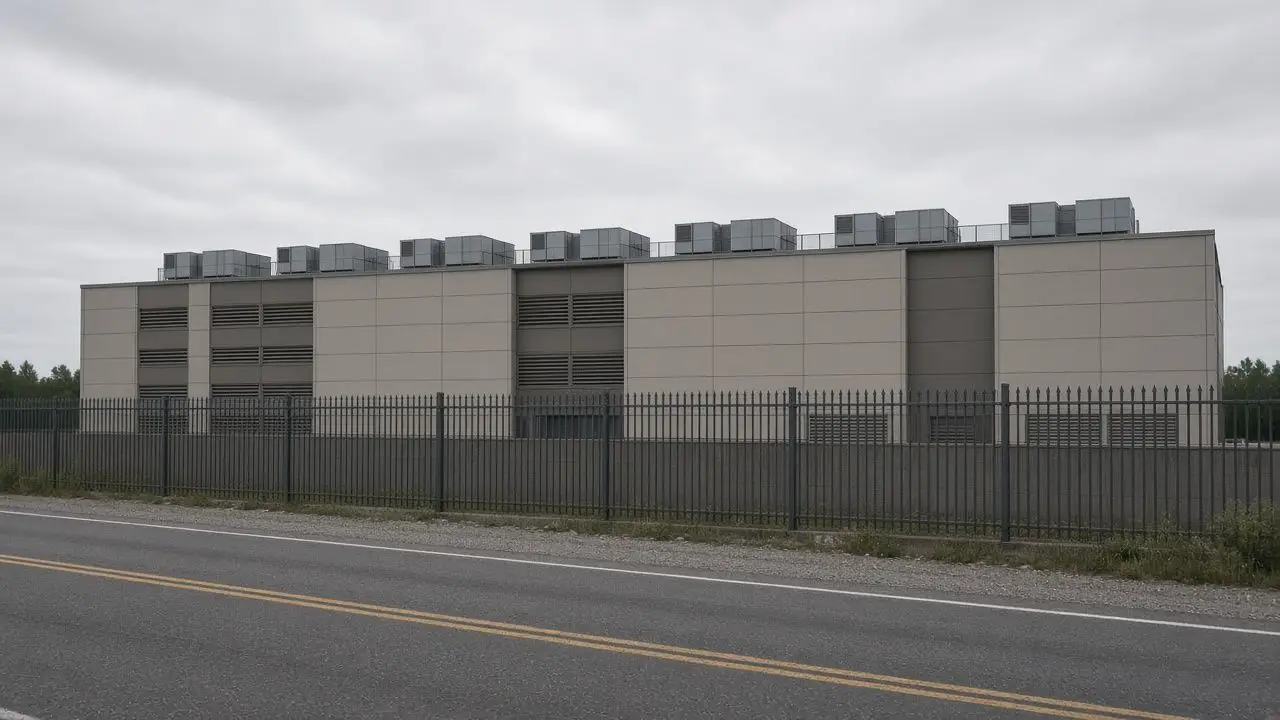
Support for construction is the weaker number. On a random half sample, 30% support new data centers in the United States and 66% oppose them. Three percent skipped. On the other half, 25% would support a new data center in their own community and 72% would oppose it. Three percent skipped. Because each question went to about half the sample, those two margins are the wider ones, plus or minus 2.8 points.
On regulation, 67% said the federal government is not doing enough to regulate the growth and development of AI technology. Twenty-two percent said it is doing about the right amount. Nine percent said it is doing too much. Two percent skipped.
A separate item asks whether people approve of the way Donald Trump is handling artificial intelligence. Thirty percent approve, 67% disapprove, and 3% skipped. That is a job rating in the topline, not a finding about any particular decision. A separate question in the same poll puts his overall job rating at 33% approve and 66% disapprove among all adults.
Asked which party they trust more to handle AI, 26% said the Democrats, 19% said the Republicans, 6% said both equally, and 49% said neither. One percent skipped. The topline marks that item as part of a half-sample battery, so the plus or minus 2.8 point margin applies.
ABC News published subgroup breaks by party, age, and community type in its October 21 story. This account sticks to the overall shares printed in the Ipsos topline.
This report is not legal, financial, or health advice. See the disclaimer.
Primary sources
More stories
-

Image: AI Headline Hub -

Image: AI Headline Hub -

Image: AI Headline Hub